-

备注:已完结
类型:电影
主演:LuisBayardo RodolfoGuerrero Eduardo
语言:西班牙语
年代:未知
简介:讲述了三位老人为了一句承诺,走上了赴异地博物馆送手稿的路程,一路艰辛、意外频出,但仍然为故友了却了遗愿的故事。
-

备注:已完结
类型:电影
主演:詹·科莱拉 Petrina Bromley De&#0
导演:克里斯托弗·阿什利
语言:英语
年代:未知
简介: 托尼奖获奖百老汇音乐剧《来自远方》(Come from Away)将被改编成电影,The Mark Gordon Company投资制片,原作者、词曲家Irene Sankoff和David Hein将编写剧本,剧版导演克里斯托弗·阿什利也确定执导影片。设定在9·11事件之后,38架飞机意外迫降加拿大纽芬兰与拉布拉多省的小镇Gander,7000名旅客滞留。在被迫停飞的处境下,小镇的居民热情地欢迎并接纳了所有旅客,他们的慷慨善良与恐怖袭击形成了鲜明的对比。文化相互碰撞,人们情绪高涨,不安感转变为信任,音乐响彻深夜,感激最终形成了长久的友谊。 该音乐剧大获成功,评论极佳,获7项托尼奖提名,最终获得最佳音乐剧导演奖。
-
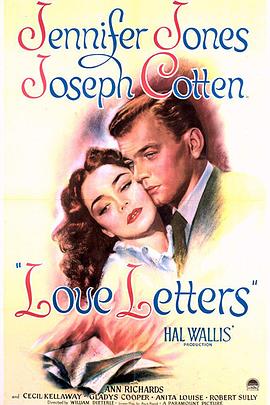
备注:已完结
类型:电影
主演:珍妮弗·琼斯 约瑟夫·科顿 塞西尔·凯拉威 Cecil Kellawa
导演:威廉·迪亚特尔
语言:英语
年代:未知
简介:艾伦(约瑟夫·科顿 Joseph Cotten 饰)是一名士兵,战友罗杰(Robert Sully 饰)请求艾伦帮自己给自己的女友维多利亚写信,在此过程中,艾伦无法自持的爱上了这个素未谋面的女孩。一场意外中,艾伦受伤进入医院疗养,而罗杰先他一步回到了家乡,顺利和维多利亚携手步入了婚姻的殿堂。艾伦虽然感到十分难过,但也只有献上祝福。 让艾伦没有想到的是,没过多久,他便收到了罗杰的死讯,于是,他来到了罗杰的家乡,想要找到维多利亚。然而,抵达了目的地的艾伦震惊的得知,维多利也竟然也已经去世了,而另一个名叫辛格尔顿(珍妮弗·琼斯 Jennifer Jones 饰)的女孩的身影浮出了水面。
-

备注:已完结
类型:电影
主演:提拉德·翁坡帕 Suchaya Kraisuwan Joey Bazo
导演:未知
语言:
年代:未知
简介:Max(Ken饰)因为女朋友的背叛伤心欲绝,但当他独自在沙滩上悲伤的时候,却很幸运的获得了一种能看透人内心思想的超能力。本来已经对爱情死心的他,却在一次偶然的机会里认识了女医生Pim,并且一见钟情。但拥有超能力的Max却不敢对Pim使用,害怕知道Pim对自己的真实想法。。。但好事多磨。几经波折之后,两人终于走到了一起......
-
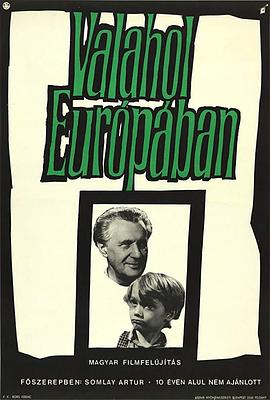
备注:已完结
类型:电影
主演:Artúr Somlay Miklós Gábor Zsuzsa Bá
语言:其它
年代:未知
简介:Somewhere in the remote region, the war ends. In the midst of ruined cities and houses in the streets, in rural hamlets, everywhere where people still live, are children who have lost their homes and parents. Abandoned, hungry, and in rags, defenseless and humiliated, they wander through the world. Hunger drives them. Little streams of orphans merge into a river which rushes forward and submerges everything in its path. The children do not know any feeling; they know only the world of their enemies. They fight, steal, struggle for a mouthful of food, and violence is merely a means to get it. A gang led by Cahoun finds a refuge in an abandoned castle and encounters an old composer who has voluntarily retired into solitude from a world of hatred, treason, and crime. How can they find a common ground, how can they become mutual friends The castle becomes their hiding place but possibly it will also be their first home which they may organize and must defend. But even for this, the price will be very high. To this simple story, the journalist, writer, poet, scriptwriter, movie director, and film theoretician Béla Balázs applied many years of experience. He and the director Géza Radványi created a work which opened a new postwar chapter in Hungarian film. Surprisingly, this film has not lost any of its impact over the years, especially on a profound philosophical level. That is to say, it is not merely a movie about war; it is not important in what location and in what period of time it takes place. It is a story outside of time about the joyless fate of children who pay dearly for the cruel war games of adults. At the time it was premiered, the movie was enthusiastically received by the critics. The main roles were taken by streetwise boys of a children's group who created their roles improvisationally in close contact with a few professional actors, and in the children's acting their own fresh experience of war's turmoil appears to be reflected. At the same time, their performance fits admirably into the mosaic of a very complex movie language. Balázs's influence revealed itself, above all, in the introductory sequences an air raid on an amusement park, seen in a montage of dramatic situations evoking the last spasms of war, where, undoubtedly, we discern the influence of classical Soviet cinematography. Shooting, the boy's escape, the locomotive's wheels, the shadows of soldiers with submachine guns, the sound of a whistle—the images are linked together in abrupt sequences in which varying shots and expressive sharp sounds are emphasized. A perfectly planned screenplay avoided all elements of sentimentality, time-worn stereotypes of wronged children, romanticism and cheap simplification. The authors succeeded in bridging the perilous dramatic abyss of the metamorphosis of a children's community. Their telling of the story (the scene of pillaging, the assault on the castle, etc) independently introduced some neorealist elements which, at that time, were being propagated in Italy by De Sica, Rossellini, and other film artists. The rebukes of contemporary critics, who called attention to formalism for its own sake have been forgotten. The masterly art of cameraman Barnabás Hegyi gives vitality to the poetic images. His angle shots of the children, his composition of scenes in the castle interior, are a living document of the times, and underline the atmosphere and the characters of the protagonists. The success of the picture was also enhanced by the musical art of composer Dénes Buday who, in tense situations, inserted the theme of the Marseilaise into the movie's structure, as a motive of community unification, as an expression of friendship and the possibility of understanding. Valahol Europaban is the first significant postwar Hungarian film. It originated in a relaxed atmosphere, replete with joy and euphoria, and it includes these elements in order to demonstrate the strength of humanism, tolerance, and friendship. It represents a general condemnation of war anywhere in the world, in any form.


