-

备注:已完结
类型:电影
主演:弗洛里安·大卫·菲茨 MandalaTayde HilmiSözer
导演:StefanHoltz
语言:德语
年代:未知
简介:你遇到一个人,坠入爱河,一切美妙神奇...但对格茨,一个可爱的、混乱的唱片店店主而言,失心于美丽的Aylin并不是件容易的事。为了赢得这个东方女孩的感情,他将不得不先赢得一个庞大的家庭。 这不是一件容易的事,尤其是Aylin的爸爸,苏莱曼,动用他一切力量来结束他们之间的关系他想撮合医生Tarkan和他的女儿在一起。格茨被迫采取极端措施去证明给苏莱曼看他的价值...
-
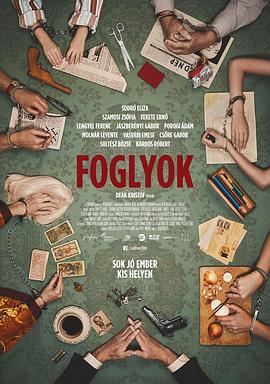
备注:已完结
类型:电影
主演:Eliza Sodró 索菲娅·绍莫希 Ernõ Fekete 列文特
导演:克里斯托弗·迪克
语言:其它
年代:未知
简介:When Fuchs starts his new job as a teacher in a prison school, replacing the old and unconventional teacher Berger against her will, he is forced to confront his biggest fear, triggered by the mysterious, withdrawn inmate Samira.
-
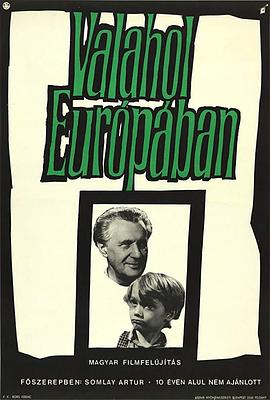
备注:已完结
类型:电影
主演:Artúr Somlay Miklós Gábor Zsuzsa Bá
语言:其它
年代:未知
简介:Somewhere in the remote region, the war ends. In the midst of ruined cities and houses in the streets, in rural hamlets, everywhere where people still live, are children who have lost their homes and parents. Abandoned, hungry, and in rags, defenseless and humiliated, they wander through the world. Hunger drives them. Little streams of orphans merge into a river which rushes forward and submerges everything in its path. The children do not know any feeling; they know only the world of their enemies. They fight, steal, struggle for a mouthful of food, and violence is merely a means to get it. A gang led by Cahoun finds a refuge in an abandoned castle and encounters an old composer who has voluntarily retired into solitude from a world of hatred, treason, and crime. How can they find a common ground, how can they become mutual friends The castle becomes their hiding place but possibly it will also be their first home which they may organize and must defend. But even for this, the price will be very high. To this simple story, the journalist, writer, poet, scriptwriter, movie director, and film theoretician Béla Balázs applied many years of experience. He and the director Géza Radványi created a work which opened a new postwar chapter in Hungarian film. Surprisingly, this film has not lost any of its impact over the years, especially on a profound philosophical level. That is to say, it is not merely a movie about war; it is not important in what location and in what period of time it takes place. It is a story outside of time about the joyless fate of children who pay dearly for the cruel war games of adults. At the time it was premiered, the movie was enthusiastically received by the critics. The main roles were taken by streetwise boys of a children's group who created their roles improvisationally in close contact with a few professional actors, and in the children's acting their own fresh experience of war's turmoil appears to be reflected. At the same time, their performance fits admirably into the mosaic of a very complex movie language. Balázs's influence revealed itself, above all, in the introductory sequences an air raid on an amusement park, seen in a montage of dramatic situations evoking the last spasms of war, where, undoubtedly, we discern the influence of classical Soviet cinematography. Shooting, the boy's escape, the locomotive's wheels, the shadows of soldiers with submachine guns, the sound of a whistle—the images are linked together in abrupt sequences in which varying shots and expressive sharp sounds are emphasized. A perfectly planned screenplay avoided all elements of sentimentality, time-worn stereotypes of wronged children, romanticism and cheap simplification. The authors succeeded in bridging the perilous dramatic abyss of the metamorphosis of a children's community. Their telling of the story (the scene of pillaging, the assault on the castle, etc) independently introduced some neorealist elements which, at that time, were being propagated in Italy by De Sica, Rossellini, and other film artists. The rebukes of contemporary critics, who called attention to formalism for its own sake have been forgotten. The masterly art of cameraman Barnabás Hegyi gives vitality to the poetic images. His angle shots of the children, his composition of scenes in the castle interior, are a living document of the times, and underline the atmosphere and the characters of the protagonists. The success of the picture was also enhanced by the musical art of composer Dénes Buday who, in tense situations, inserted the theme of the Marseilaise into the movie's structure, as a motive of community unification, as an expression of friendship and the possibility of understanding. Valahol Europaban is the first significant postwar Hungarian film. It originated in a relaxed atmosphere, replete with joy and euphoria, and it includes these elements in order to demonstrate the strength of humanism, tolerance, and friendship. It represents a general condemnation of war anywhere in the world, in any form.
-

备注:已完结
类型:电影
主演:Ferdinand Marian Kristina Söderbaum
导演:威特·哈尔兰
语言:其它
年代:未知
简介:In this notorious Nazi propaganda historical costume melodrama, a conniving, ambitious Jewish businessman, Suess Oppenheimer, snares a post as treasurer to the Duke of Wurttemburg by showering the corrupt duke with treasure and promises of even greater riches. As the Jew's schemes grow more elaborate and his actions more brazen, the dukedom nearly erupts into civil war. Persuaded by the Jew, the Duke all but scuttles the constitution and alienates the assembly by lifting the local ban on Jews in Stuttgart. In a final outrage, the Jew rapes a wholesome German girl and tortures her father and fiancee. When the Duke succumbs to a sudden heart attack, the assembly of Elders try the Jew and sentence him to death for having carnal knowledge of a Christian woman. Summary written by Kevin Rayburn
-

备注:已完结
类型:电影
主演:约瑟夫·贝尔比奇 Stefan Güttler 克莱门斯·沙伊茨 福尔
导演:沃纳·赫尔佐格
语言:其它
年代:未知
简介:这是一部末世纪寓言故事,晦涩但富有视觉表现力。 故事描述一个以玻璃制造为生的村镇,玻璃厂的工头死了,也带走了生产红宝石玻璃的秘方。工厂主想尽一切办法试图找回配方,却徒劳无功。 预言家海斯预测的坏事都变成现实,在村民中引起恐慌。海斯还预言玻璃工厂将被烧毁,人们相互仇视残杀,战火在世界各地燃起。后来预言果真应验,工厂主在绝望之中烧了工厂,人们的忍耐也到达了极限.... 影片的结尾,在世界边缘的一个小岛上,一些人为了探索世界的真相,驾着小船开始了新的冒险之旅....
-

备注:已完结
类型:电影
主演:Klas-Gösta Olsson Anne Tubin Lennar
导演:罗伊·安德森
语言:其它
年代:未知
简介:1986年,瑞典国家健康与福利部委托导演罗伊·安德森就艾滋病题材拍摄一部教育影片,以便在学校和军队向学生和新兵传播艾滋病源头和防御的信息。但在电影拍摄期间,健康与福利部要求安德森终止该项目。原因是他们观看了已拍摄部分的素材,并对影片里信息的可靠性和拍摄风格提出了质疑。安德森并未遵循,而是凭几之力完成了该部电影。 关于艾滋病的起源,影片采用了阴谋论式的论调。在它的描述中,艾滋病病毒并非起源于非洲并由动物传播给人类,而是由美国科学家在实验室中创造出来,并随后应用于人体实验。今天,这部电影被看做是罗伊·安德森个人风格形成中的重要一步。


