-
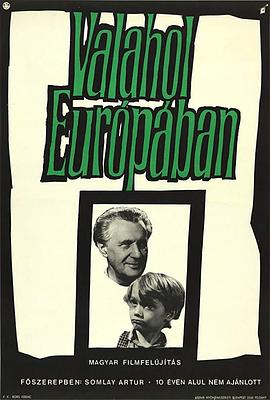
备注:已完结
类型:电影
主演:Artúr Somlay Miklós Gábor Zsuzsa Bá
语言:其它
年代:未知
简介:Somewhere in the remote region, the war ends. In the midst of ruined cities and houses in the streets, in rural hamlets, everywhere where people still live, are children who have lost their homes and parents. Abandoned, hungry, and in rags, defenseless and humiliated, they wander through the world. Hunger drives them. Little streams of orphans merge into a river which rushes forward and submerges everything in its path. The children do not know any feeling; they know only the world of their enemies. They fight, steal, struggle for a mouthful of food, and violence is merely a means to get it. A gang led by Cahoun finds a refuge in an abandoned castle and encounters an old composer who has voluntarily retired into solitude from a world of hatred, treason, and crime. How can they find a common ground, how can they become mutual friends The castle becomes their hiding place but possibly it will also be their first home which they may organize and must defend. But even for this, the price will be very high. To this simple story, the journalist, writer, poet, scriptwriter, movie director, and film theoretician Béla Balázs applied many years of experience. He and the director Géza Radványi created a work which opened a new postwar chapter in Hungarian film. Surprisingly, this film has not lost any of its impact over the years, especially on a profound philosophical level. That is to say, it is not merely a movie about war; it is not important in what location and in what period of time it takes place. It is a story outside of time about the joyless fate of children who pay dearly for the cruel war games of adults. At the time it was premiered, the movie was enthusiastically received by the critics. The main roles were taken by streetwise boys of a children's group who created their roles improvisationally in close contact with a few professional actors, and in the children's acting their own fresh experience of war's turmoil appears to be reflected. At the same time, their performance fits admirably into the mosaic of a very complex movie language. Balázs's influence revealed itself, above all, in the introductory sequences an air raid on an amusement park, seen in a montage of dramatic situations evoking the last spasms of war, where, undoubtedly, we discern the influence of classical Soviet cinematography. Shooting, the boy's escape, the locomotive's wheels, the shadows of soldiers with submachine guns, the sound of a whistle—the images are linked together in abrupt sequences in which varying shots and expressive sharp sounds are emphasized. A perfectly planned screenplay avoided all elements of sentimentality, time-worn stereotypes of wronged children, romanticism and cheap simplification. The authors succeeded in bridging the perilous dramatic abyss of the metamorphosis of a children's community. Their telling of the story (the scene of pillaging, the assault on the castle, etc) independently introduced some neorealist elements which, at that time, were being propagated in Italy by De Sica, Rossellini, and other film artists. The rebukes of contemporary critics, who called attention to formalism for its own sake have been forgotten. The masterly art of cameraman Barnabás Hegyi gives vitality to the poetic images. His angle shots of the children, his composition of scenes in the castle interior, are a living document of the times, and underline the atmosphere and the characters of the protagonists. The success of the picture was also enhanced by the musical art of composer Dénes Buday who, in tense situations, inserted the theme of the Marseilaise into the movie's structure, as a motive of community unification, as an expression of friendship and the possibility of understanding. Valahol Europaban is the first significant postwar Hungarian film. It originated in a relaxed atmosphere, replete with joy and euphoria, and it includes these elements in order to demonstrate the strength of humanism, tolerance, and friendship. It represents a general condemnation of war anywhere in the world, in any form.
-

备注:已完结
类型:电影
主演:Oktay Namazov Maryam Naghiyeva Narm
导演:希拉尔·贝达罗夫
语言:阿塞拜疆语
年代:未知
简介:达乌德是一位无拘无束,不被世俗所理解的年轻人。他一心想要寻找自己“真正”的家庭,坚信只有他们才能带给他爱和希望。在不幸卷入一场纷争后,达乌德踏上了一趟始料未及的逃亡之旅。一路上,他遇到了形形色色的人,目睹一场接一场的“意外”,成为了死神的代言人。在潜意识与当下的碰撞之中,这趟奇幻旅程愈发扑朔迷离。师从贝拉·塔尔,曾凭借《柿子生长时》入围2019年金椰奖纪录片竞赛的阿塞拜疆新锐导演希拉尔·贝达罗夫,其剧情片新作《死于之间》首度入围威尼斯电影节主竞赛单元。
-

备注:已完结
类型:电影
主演:阿丽萨·弗雷因德利赫 拉丽萨·古泽耶娃 尼基塔·米哈尔科夫 安德烈·米
导演:埃利达尔·梁赞诺夫
语言:其它
年代:未知
简介:拉丽莎(阿丽萨·弗雷因德利赫 Alisa Frejndlikh 饰)拥有非常美丽的外表,她本是衔着金汤匙出生的千金小姐,无奈家道中落,如今的一家人过着捉襟见肘的生活。拉丽莎有两个姐姐,她们都已经嫁为人妇,拉丽莎是母亲最后的希望,母亲想要她嫁给一个有钱人,如此她才能够再度过上富裕的日子。 拉丽莎爱上了名叫巴拉托夫(尼基塔·米哈尔科夫 Nikita Mikhalkov 饰),与此同时,一个邮政部门的小职员卡朗迪耶谢夫(安德烈·米亚赫科夫 Andrey Myagkov 饰)也在热烈的追求着拉丽莎。本来,拉丽莎和巴拉托夫之间感情发展的很顺利,哪知道天有不测风云,巴拉托夫破产了,之后,他选择了离开。痛苦之中,拉丽莎被卡朗迪耶谢夫趁虚而入,两人订了婚。
-

备注:已完结
类型:电影
主演:宝莲·艾格特 露易丝·布莱莎 阿黛拉·哈内尔 沃伦·杰坤 阿丽斯·德·
导演:瑟琳·席安玛
语言:法语
年代:未知
简介:一次偶然中,玛丽(波琳·艾克阿特 Pauline Acquart 饰)遇见了花样游泳队的队长弗洛利亚那(阿黛拉·哈内尔 Adele Haenel 饰),弗洛利亚那的性感和美丽很快就吸引了玛丽的目光,然而,在传闻中,弗洛利亚那却并不如表面看来的那么纯洁和美好。随着时间的推移,玛丽渐渐发现传闻的虚假,与此同时,她深深地迷恋上了弗洛利亚那,已经到了无法自拔的境地。 安妮(露易丝·巴彻雷 Louise Blachère 饰)是玛丽的好友,在玛丽为弗洛利亚那痴狂的那段日子里,她却偷偷喜欢上了弗洛利亚那的男友弗朗西斯(沃伦·杰坤 Warren Jacquin 饰)。可是,安妮知道自己长得并不漂亮,于是决定将这份感情埋藏在心底。
-

备注:已完结
类型:电影
主演:布鲁诺·冈茨 伊莎贝拉·雷纳德 法布里齐奥·本蒂沃利奥 阿希莱亚斯·斯
导演:西奥·安哲罗普洛斯
语言:其它
年代:未知
简介:患有癌症晚期的诗人亚历山大(Bruno Ganz)在进医院等待死亡的前一天,想将一直陪伴其左右的狗交托自己的亲生女儿,遭到对方拒绝。女儿对自己处境的不了解,以及女婿打算将自己的祖屋卖掉,令亚历山大神伤不已黯然离开。 在亚历山大孤独地面对自己生命的最后一天时,太太安娜在世时的诸多生活片段、探望独自生活在疗养院中的年迈衰弱母亲的情形、花费大半生心血研究的19世纪诗人所罗穆斯等,一一以或真实或梦幻的形态与他会面,来助他解除对“明天会持续多久”的困惑。