-

备注:已完结
类型:电影
主演:埃德蒙·戈温 约翰·福赛思 米尔翠德·纳特威克 米尔德丽德·丹诺克 罗
导演:阿尔弗雷德·希区柯克
语言:英语
年代:未知
简介:小男孩哈尼在森林中漫步时,发现了他的父亲——哈利的尸体。不同于一般谋杀案,这次因为多人都自认为凶手而令案情更加扑朔迷离。亚伯特船长(埃德蒙?格温 Edmund Gwenn 饰)认为是他在打猎射击时误杀了哈利;村落里的老处女葛雷布礼小姐(麦尔翠德?耐维克 Mildred Natwick 饰)认为是因为她为了保住自己的名声而用一只鞋子打了哈利的头部而造成他的死亡;与哈利感情不睦的妻子珍妮佛(雪莉?麦克雷恩 Shirley MacLaine 饰)则认为是她因为反抗哈利的性爱用装牛奶的罐子敲向他的脑袋而造成了他的死亡。真相最后能否水落石出?
-

备注:已完结
类型:电影
主演:Juan Pablo Olyslager María Telón Di
导演:杰罗·布斯塔曼特
语言:其它
年代:未知
简介:暴雨代替了众人的无语,空气裡的震惊与愤怒如鹰,盘旋在豪宅的大厅,等待著迟迟未归的男主人保罗。拥有高薪工作、漂亮妻子和可爱小孩的他,犯了禁忌的爱,而被阻隔在完美的生活门外。他的家人和教会,决定以上帝之名治癒他、拯救他。教堂内,轰隆的祷念不断灌入保罗耳内,喃念之语泛起震盪,碎裂了他的精神,以恐惧黏组成满佈裂痕的信念。 出轨到出柜,爱上在世俗眼光中不该爱的人。保罗与新欢搬进新公寓,开始自由的新生活,但他的心却未曾安心入住。他的爱情,被视为罪与疾病,受到各方抵制、谴责;他被所爱之人折磨,痛苦地徘徊在伤害和幸福之间。 「我想了解一个受过教育的人,最终会如何陷入他自己心中的监牢。宗教环境、政治压迫和传统家庭,又如何压迫男人的同性情爱。」──加伊罗.布斯塔曼德
-

备注:已完结
类型:电影
主演:Veronika Zilková 扬·哈特尔 Jaroslava Kr
导演:杨·史云梅耶
语言:其它
年代:未知
简介:一对老夫妇始终没有小孩,并为此伤心,一日,丈夫挖出了一具人形树根,送给妻子当做小孩取乐,但令人意想不到的是,这具人形树根竟然真的活了起来,夫妇俩欣喜若狂,把它叫做欧提科。欧提科显然是个胃口很好的小孩,一直哭闹着要吃的,老夫妇两人为了喂饱它,花光了所有的钱,但它仍是饥饿地捉了家里的猫吃掉了。尝到肉味道欧提科从此拒绝其他食物,又把偶然进入家中的邮差、路人,还有楼里的邻居都吃掉了。老夫妇又惊又怕,但面对越长越大的欧提科显然没有任何办法,只要任由它吃掉了自己。没了管束的欧提科走到大街上,遇到的活人活物都进了它无底洞一样的胃。在菜地大啖卷心菜后,欧提科睡在了树下,直到愤怒的田地主人老太婆向它举起斧头……
-

备注:已完结
类型:电影
主演:格斯塔·霍洛贝克 Aleksandra Slaska 特蕾莎·什米盖武
导演:沃伊切赫·哈斯
语言:其它
年代:未知
简介:A suicidal alcoholic’s last day teems with images of anxiety and Kafkaesque paranoia. Adapted from Marek Hlasko’s novel ‘The First Step in the Clouds’, Has’ feature debut is cinematic delirium tremens, as young man Kuba Kowalski escapes his cramped flat to wander from bar to bar, unable to escape the trap of isolation. The metaphorical noose tightens as Kuba, nearly saved by the love of a good woman, dives deeper into hallucinatory intoxication.
-
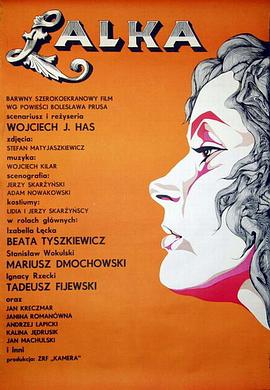
备注:已完结
类型:电影
主演:马里乌什·德莫霍夫斯基 贝娅塔·蒂希基维茨 菲耶夫斯基·塔德乌什 Ja
导演:沃伊切赫·哈斯
语言:其它
年代:未知
简介:The Doll is an adaptation of the novel, The Doll (novel) by Bolesław Prus, which is regarded by many as one of the finest Polish novels ever written and, along with Pharaoh (novel), made Bolesław Prus a potential candidate for the Nobel Prize in literature. The influence of Émile Zola is evident, and some have compared the novel to Madame Bovary by Gustave Flaubert; both were Prus's contemporaries. The movie, however, may be more compared to Stendhal's Le Rouge et le Noir, (The Red and the Black). The Doll constitutes a panorama of life in Warsaw between 1878 and 1879, and at the same time is a subtle story of three generations of Polish idealists, their psychological complications, their involvement in the history of the nineteenth century, social dramas, moral problems and the experience of tragic existence. At the same time this story describes the disintegration of social relationships and the growing separation of a society whose aristocratic elite spreads the models of vanity and idleness. In the bad air of a backward country, anti-Semitic ideas are born, valuable individuals meet obstacles on their way, and scoundrels are successful. This poetic love story follows a nouveau riche merchant, Stanislaw Wokulski, through a series of trials and tribulations occasioned by his obsessive passion for an aristocratic beauty, Izabela Lecka, played by the famous Polish actress, Beata Tyszkiewicz. Plot As a descendant of an impoverished Polish noble family, young Wokulski is forced to work as a waiter at Hopfer's, a Warsaw restaurant, while dreaming of a life in science. After taking part in the failed 1863 Uprising against Tsarist Russia, he is sentenced to exile in Siberia. On eventual return to Warsaw, he becomes a salesman at Mincel's haberdashery. Marrying the late owner's widow (who eventually dies), he comes into money and uses it to set up a partnership with a Russian merchant he had met while in exile. The two merchants go to Bulgaria during the Russo-Turkish War of 1877-78, and Wokulski makes a fortune supplying the Russian Army. The enterprising Wokulski now proves a romantic at heart, falling in love with Izabela, daughter of the vacuous, bankrupt aristocrat, Tomasz Łęcki. In his quest to win Izabela, Wokulski begins frequenting theatres and aristocratic salons; and to help her financially distressed father, founds a company and sets the aristocrats up as shareholders in his business.The indolence of these aristocrats, who secure with their pensions, are too lazy to undertake new business risks, frustrates Wokulski. His ability to make money is respected but his lack of family and social rank is condescended to. Because of his help (in secret) to Izabela's impecunious but influential father, the girl becomes aware of his affection. In the end she consents to accept him, but without true devotion or love.(wikipedia)


