-

备注:已完结
类型:电影
主演:Robert Clarke Margaret Field Raymon
导演:埃德加·G·乌默
语言:英语
年代:未知
简介:One of the five sci-fi's I remember every single detail of from my earliest days as a fan. For the genre, I think it's considerably above average. The moor is nicely atmospheric. There's one of every character in the book the good guy, the bad guy, the local sheriff, the lovely damsel, her father the old professor, etc. The scene where we're looking for the first time through the window of the ship and the visitor peeks out from the other side is easily as good as the three-fingered-hand-on-the-shoulder in War of the Worlds. Nice character to the visitor, for whom, like Karloff's Frankenstein, we end up feeling some empathy .
-

备注:已完结
类型:电影
主演:Michael Piccirilli Pamelyn Chee A
导演:Hann-Shi Lem
语言:英语
年代:未知
简介:一项革命性的人类基因研究计划,为预防疾病与犯罪带来了莫大帮助,身为研究员的一份子,希欧多不但致力于生命的发展与延续,还有个能预知他人死亡的特殊能力。不过这次他的能力却阴错阳差害死了自己的女友安娜,内疚不已的希欧多以悲伤度日,直到一个月过去,安娜竟又活生生地出现在他面前?
-

备注:已完结
类型:电影
主演:藤崎露琪诺 Yoshiichi Kawada 小柴亮介 南加绘 Yuu
导演:山口洋辉
语言:日语
年代:未知
简介:在一个迥异鬼魅的社会,上百层的高楼大厦拔地而起,俨然构筑了一个全然封闭的城市乡镇。居住在138层的女子高中生藤崎(藤崎露琪诺 饰)此前很长时间没有去学校,这一天她乘坐交通工具“移动机筒”赶往学校,不同身份的乘客相继走入,带着各异的目的去往他们的楼层。谁知意外毫无征兆发生,移动机筒因爆炸事故突然停止运行。突如其来的状况,让所有人的命运发生转变。原本甘心受戮的死囚犯仿佛窥到一线生机,因此展开拼死搏杀。逼仄的轿厢内,人间地狱骤然降临。 在此过程中,藤崎好像发现自己拥有某种奇特的能力,而她的命运也变得愈加扑朔迷离……
-
备注:已完结
类型:电影
主演:Margarete Schön Theodor Loos Paul B
语言:其它
年代:未知
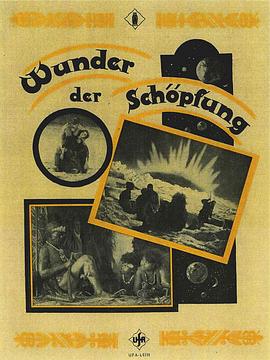
简介:Wunder der Schöpfung is an extraordinary, fascinating Kulturfilm trying to explain the whole human knowledge of the 1920s about the world and the universe. 15 special effects experts and 9 cameramen were involved in the production of this film which combines documentary scenes, historical documents, fiction elements, animation scenes and educational impact. It its beautifully colored, using tinting and toning in a very elaborated way. Some visual ideas in the sequences with a space shuttle visiting different planets in the universe seem to have to be the inspiration for Stanley Kubrick's 2001 A Space Odyssey. In the context of Germany's Kulturfilm phenomenon, Wunder der Schöpfung was among the greatest achievements of the 1920s. The production was constructed, rehearsed, and shot over a period of two and a half years, under the supervision of Hanns Walter Kornblum. The idea to describe the universe and man's place in it well suited UFA's Grossfilm mentality, one year before the Metropolis catastrophe. Hundreds of skilled craftsmen participated in the project, building props and constructing scale models drawn by 15 special effects draughtsmen, while 9 cameramen in separate units worked on the historical, documentary, fiction, animation, and science-fiction sequences. Without star roles or even protagonists, the film's plot is crowded with meticulously structured and skillfully acted single scenes an artful mosaic of small vignettes. No less than four credited university professors ensured the factual background behind the scientific and historical events portrayed. The film's symbol of progress and the new scientific era is a spacecraft, travelling through the Milky Way, making all the planets and their inspiring worlds familiar to us, with the extravaganza of their distinctive features. The film's educational intentions, however, become steadily more obscure, humorous, or even campy as this popularization project proceeds. With the excuse of presenting the end of the world a not-so-new concept as a new, undeniably scientific truth, the film veers happily along a new path, displaying detailed apocalyptic scenes of the end of mankind. For today's audiences, this amazing film demonstrates how the universe was comprehended in the 1920s, and how that view was sold to contemporary audiences.


